Should bike helmets be mandatory?
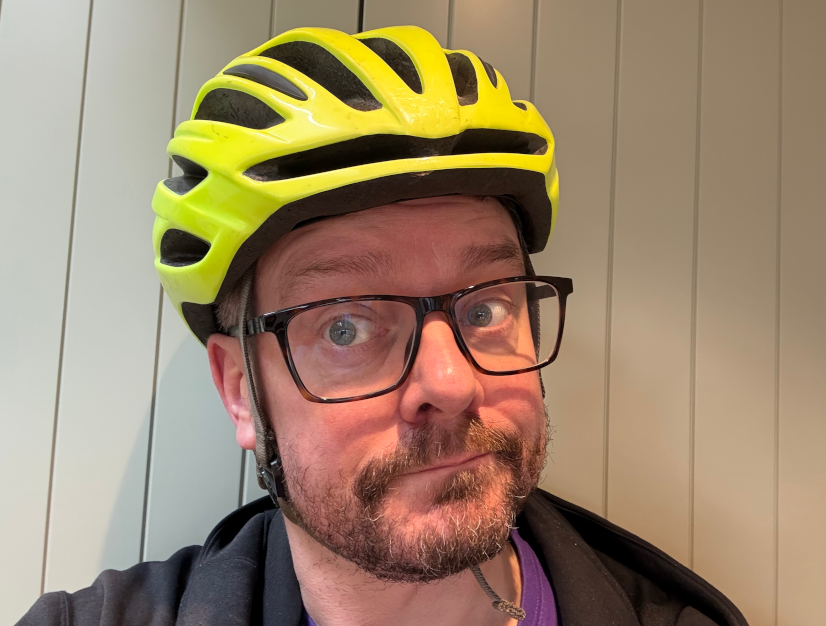
I was on TV a couple of weeks ago talking about Judge O'Donohoe's ill-advised comments on cyclists, where he described an entire class of ordinary people as a "nightmare". In the clip I can be seen riding a bike on a fully segregated bike lane without a helmet. After the clip aired I got some emails and phone calls from members of the public asking why I would do something so dangerous. This is a good question; I'll try to answer it here, based on empirical evidence and my own 30+ years of pootling round Dublin on my bike.
What bike helmets are for
The EU and UK safety standard for bicycle helmets is EN 1078. All bicycle helmets must comply with this standard, which states that the helmet must survive a drop from a height of 1.5m onto a hard flat surface. I'm just over 1.8m tall, so a bike helmet doesn't have to be able to survive a free fall drop from my head height to the ground in order to comply with regulations. Unlike a motorbike helmet, the level of protection afforded by a bike helmet is light.
Having said that, if you fall off your bike while cycling, there's no question that wearing a helmet offers some protection. The most common sort of injury that results from bike accidents are cuts and bruises; wearing a helmet affords the same sort of protection from these sorts of minor injuries that gloves do. For more serious accidents, there's evidence that helmets reduce the incidence of brain injury by about 2/3rds. Note that this means in about 1/3rd of cases, a helmet does nothing to prevent brain injury. So while wearing a helmet is better than not wearing one in terms of minimising injury during an accident, it's important to be realistic about the level of protection that is afforded - a helmet does not impart invulnerability or anything like it.
It's important to note that bike helmets are not rated to survive collision with a motor vehicle. There are many examples of people being killed or severely injured on Irish roads by vehicles while wearing bike helmets - I'm not going to link to these reports here as they are distressing to read. Suffice to say I personally know a number of people who have sustained life-changing injuries as a result of being hit by a vehicle while cycling, despite the fact they were wearing a helmet at the time.
Hierarchy of controls
Having made the case that bike helmets improve safety, what was I doing on national TV riding a bike without a helmet? Let's talk about the factors that make cycling dangerous.
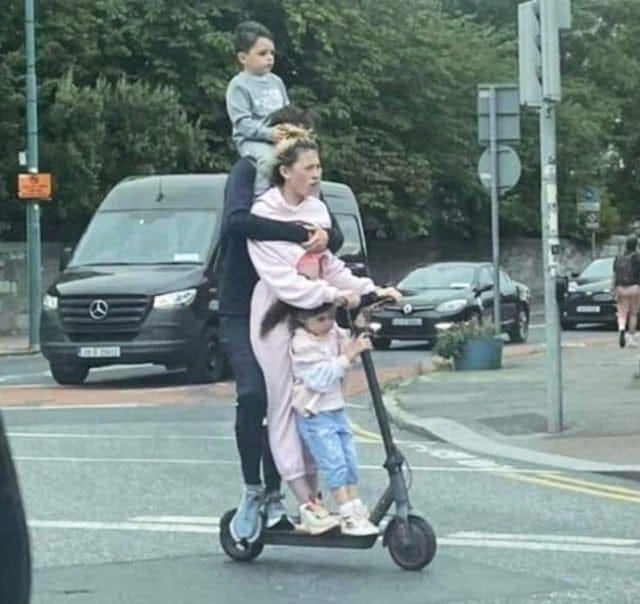
In and of itself, cycling is a very safe activity. It's less dangerous than tennis, but slightly more dangerous than golf. I don't think anyone would have called me up to ask me what I was doing playing tennis without a helmet, so what makes cycling different? The answer is motor vehicles. In 2025, 14 people were knocked off their bikes and killed on the roads in Ireland. Ultimately it was not cycling that caused their deaths, it was being struck by a hard, fast moving object weighing thousands of kg. Cycling can be described as a safe activity, often conducted in a hazardous environment.
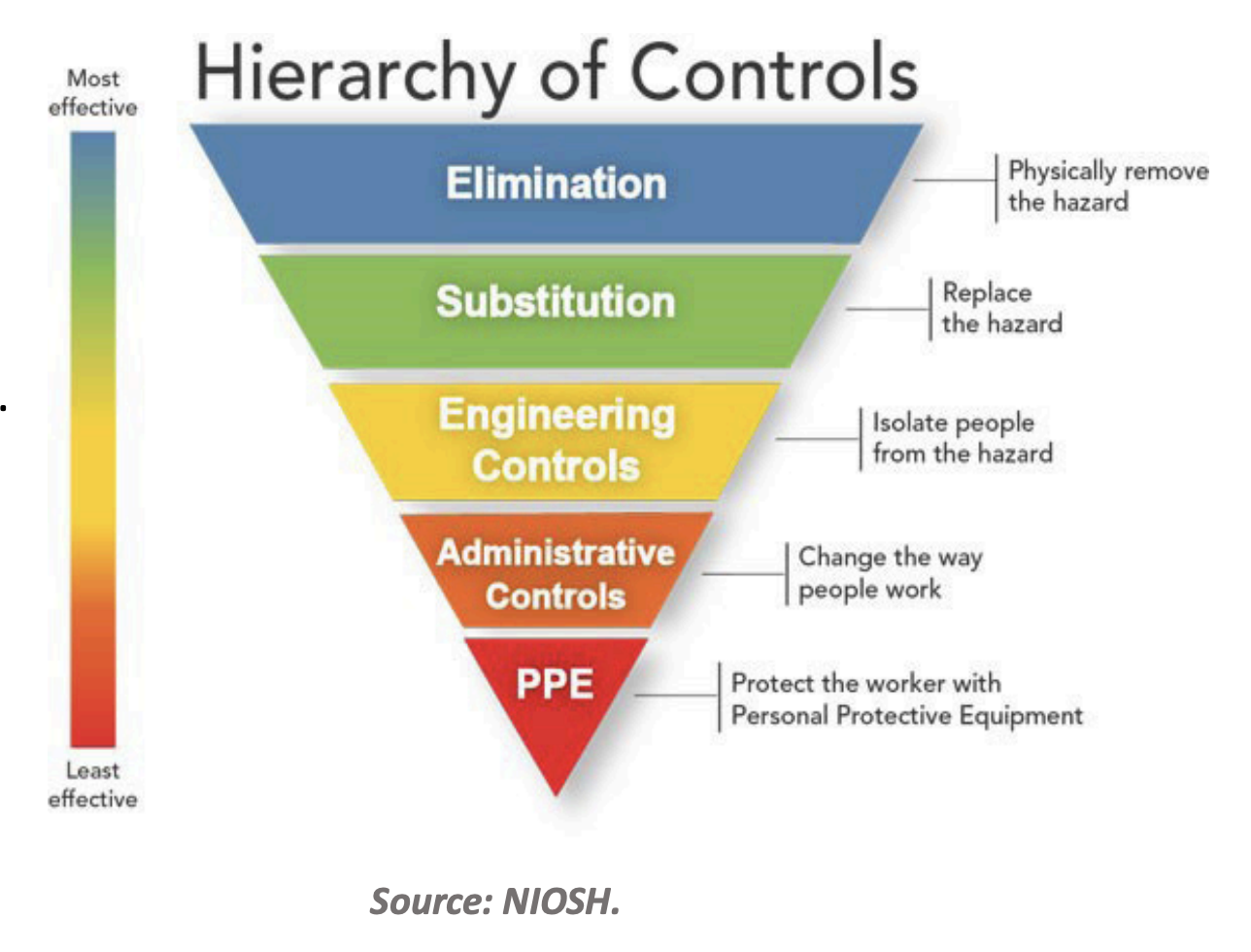
What's the best way to protect cyclists from the hazard presented by motor vehicles? The graphic below shows the "hierarchy of controls" in safety management, which shows us that the most effective way to promote safety is to physically remove hazards, while the least effective is PPE (personal protective equipment). In accordance with these evidence-based guidelines, the right approach is to remove cars from the spaces where people cycle.
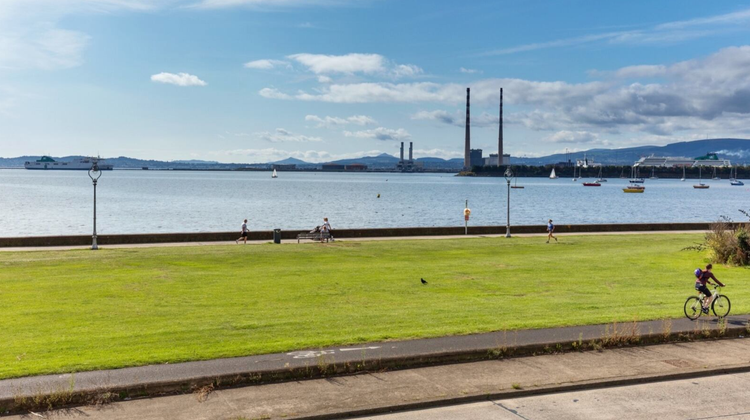
In accordance with the guidelines above, Dublin's Active Travel Network is currently under development. Its aim is to provide hundreds of kms of separated cycling infrastructure in Dublin, meaning people can get around the city on bikes without having to cross paths with dangerous motor traffic. Building good-quality, safe infrastructure will encourage more people to cycle, which in itself increases safety due to the "critical-mass" effect: driver behaviour changes when there are a large number of visible cyclists.
In summary: cycling is safe, but cycling in traffic is dangerous, so to maximise safety the right thing to do is to separate cyclists from traffic.
Cycling and the public good
The public health benefits of cycling are well understood. In Dublin in 2023, cycling saved the HSE €64.5 million, money that can be deployed in other parts of the health service. There is strong evidence that physical activity like cycling slows aging, boosts the immune system, and helps people have a better quality of life for more of their lifetime than people who don't exercise.
From an economic perspective, Dublin is the third most congested city in the world. Dublin drivers lose on average 8 days a year due to traffic congestion. This is clearly bad for the economy, but it also robs people of time they could be spending with their families or doing something else they enjoy. Every unnecessary car journey that we replace with a bike ride frees up road space for the sorts of car journeys that can't be avoided. There's a net economic benefit of €1.48 for every km cycled instead of driven
Finally, the world is in a climate emergency. During my lifetime atmospheric CO2 has gone up by a third (from 331 parts-per-billion in 1975 to 429 ppb in 2026), trapping more energy in the atmosphere and driving an increase in the frequency in extreme weather events. Here in Ireland, we are seeing dramatically increased rainfall in winter driven by an increase in the frequency and severity of storms. In the face of these facts, everyone who chooses zero-emission transport is contributing to the collective good; as a society, to promote the public good, we should encourage more people to cycle.
Should helmets be mandatory?
Let's talk about the practicality of mandatory bike helmet laws. There are about 14,500 sworn members of An Garda Siochána, serving a population of 5.3mn. Ireland has the 6th lowest number of police per capita in the EU. We know that enforcement of existing traffic laws is not prioritised by the Gardaí so it's not clear to me how we add this additional enforcement burden to the Gardaí. Given that there are 680,000 bicycle journeys every day, how many additional Gardaí would we need to hire to make sure they are all compliant with the law?
Another practical point is that it's not clear how bike share schemes like bleeper or Dublin Bikes would work if helmets were mandatory. The great benefit of these schemes is their pick-up-and-go model: there's a very low barrier to using a shared bike which means they get used a lot. Requiring people to carry a helmet with them in order to use one of these bikes adds a barrier that would effectively kill the schemes, which would be a loss for all Dubliners. Every person on a shared bike is not adding to traffic or taking a space on public transport which is a net benefit to all Dubliners.
No EU country requires mandatory helmets for cyclists. The rationale behind this is that helmet requirements reduces the number of people who will cycle on any given day - the population-level health, economic and climate benefits of cycling outlined above outweigh the risks to the individual of cycling without a helmet.
But hey, enough of my yakking - The Irish Cycling Campaign has an excellent one-pager on the subject of bike helmets which is worth a look.
In conclusion, while I think that bike helmets are good (wear one if you want!) I don't think mandatory helmet laws are a good idea - they
- create a false narrative around the dangers of cycling
- are labour-intensive and expensive to enforce
- have a negative impact on bike-share schemes (which are essential parts of the transport mix in Dublin)
- suppress the number of people who cycle