Cycling past Connolly
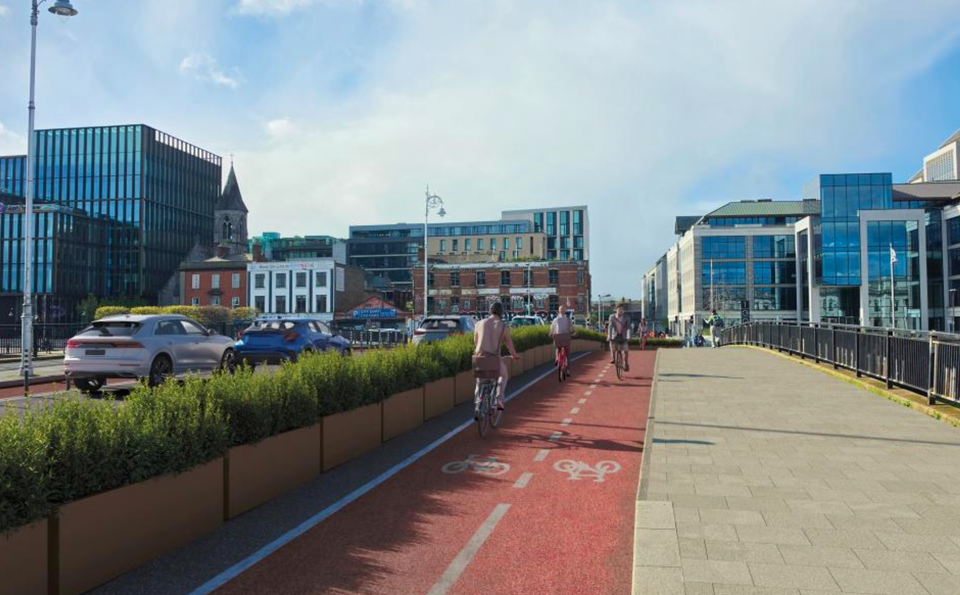
The Irish Cycle website has good coverage of the plan to reconfigure the road outside Connolly Station, including an unusual scheme to move cyclists into a segregated 2-way bike lane running along the road median.
 Cian Ginty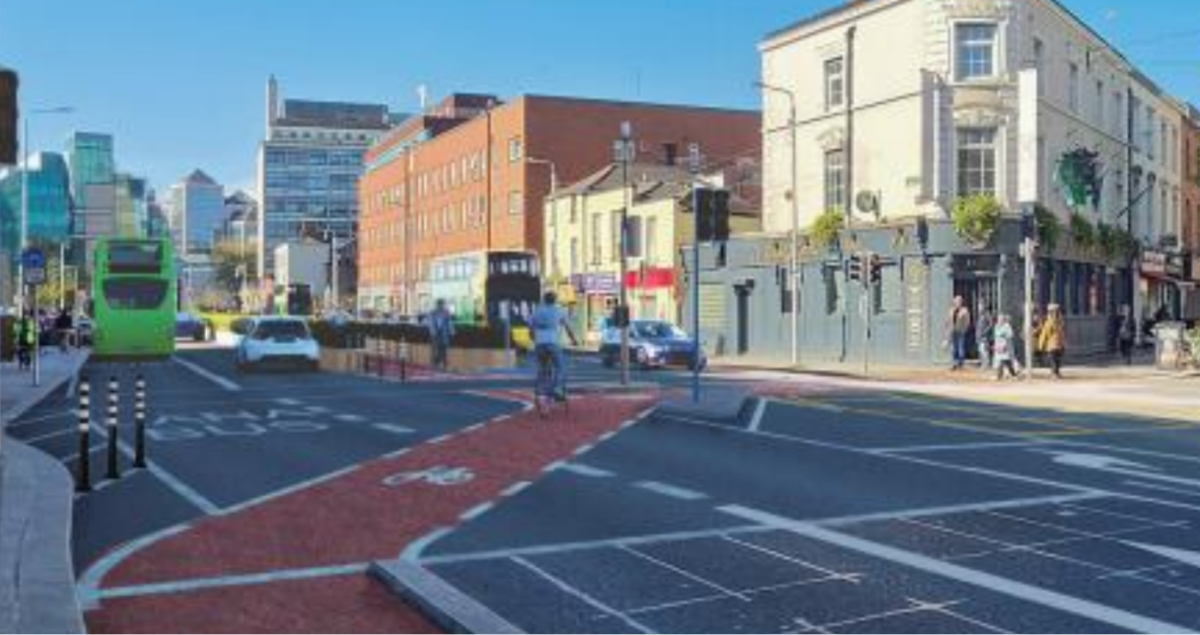
This design has met with mixed reactions, in part due to disappointment at the compromise nature of the plan. It's a road reconfiguration with no public realm improvements or placemaking to speak of, which is a pity compared to the earlier plans put forward in 2024. In this article I'm going to put forward the case for why this change is positive, and while it might not be perfect, this is a case where we shouldn't let the perfect be the enemy of the good.
What's there now?
Right now, coming into the city on a bike from the North-East of the city via the C2CC brings you to an abrupt change once you get to the bottom of Talbot St. In the image below (the road works are now gone) you can see that cyclists end up on the left hand side of a multi-lane road, with cars going past and buses pulling in and out of the line of bus stops outside the station.
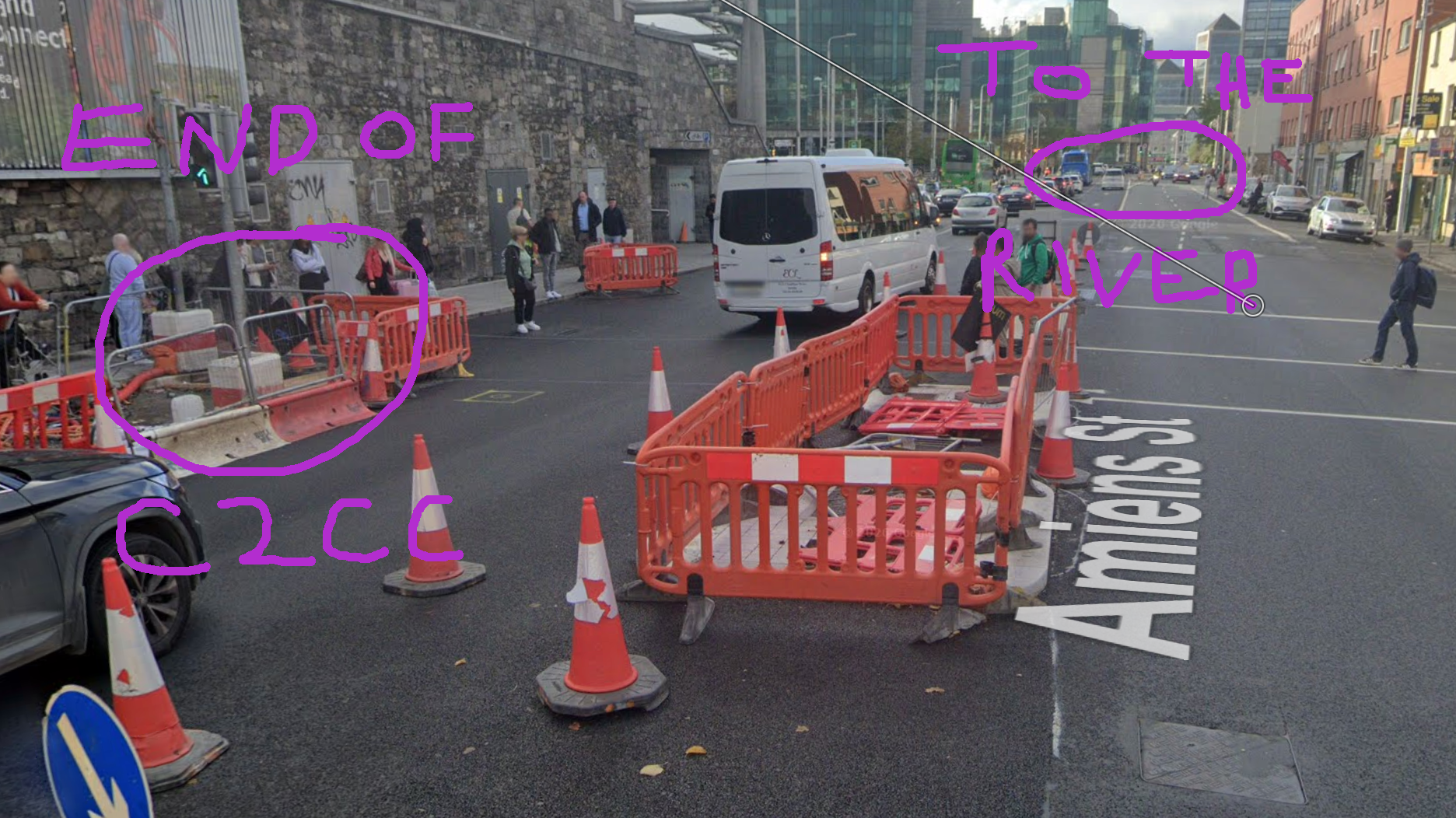
My daily commute involves getting from A (marked "end of C2CC" in the photo above) to B on the map below. There are a few tricky spots in this stretch, which I have numbered:
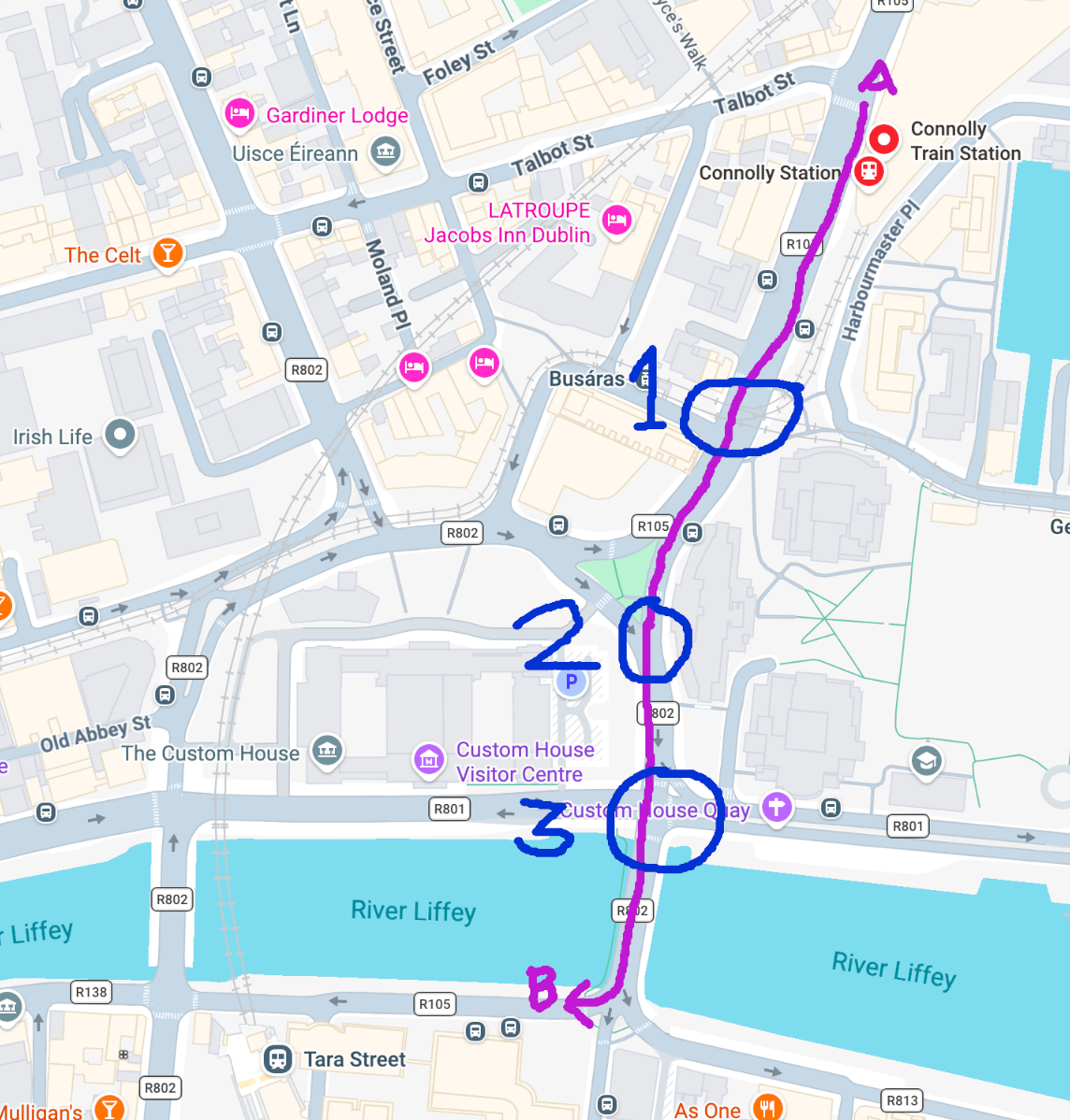
1) LUAS tracks - these are fine when it's dry and when cycling across them at a right angle. They can be treacherous if it's wet or if you're forced to cross them at a shallower angle. I have come off my bike more than once at this spot, usually because I was trying to position myself on the right of the lane and thus didn't hit the tracks straight on. Thankfully this has never happened to me in fast-moving traffic, but that's more a matter of luck than anything else.
2) The Eternal Flame - this triangle is where I position myself on the right-hand side of the right-hand lane in order to get onto the combined bike / bus lane leading to Customs House Quay. The bus/bike lane is the rightmost of 4 lanes of traffic - as a vulnerable road user I'm very much relying on the motorists around me being alert and situationally aware so I can make it across safely.
3) Talbot Memorial Bridge - when the lights change here all the traffic moves at once. Some motorists will race to beat the lights on the south side of the bridge and other motorists will attempt to change lane on the bridge (as they can go left, straight or right at the opposite end and need to be in the correct lane). Cyclists are very vulnerable here - I typically "take the lane" and cycle in the middle of the rightmost lane, which does not endear me to motorists, but experience has taught me that not being assertive about lane position leads to close passes.
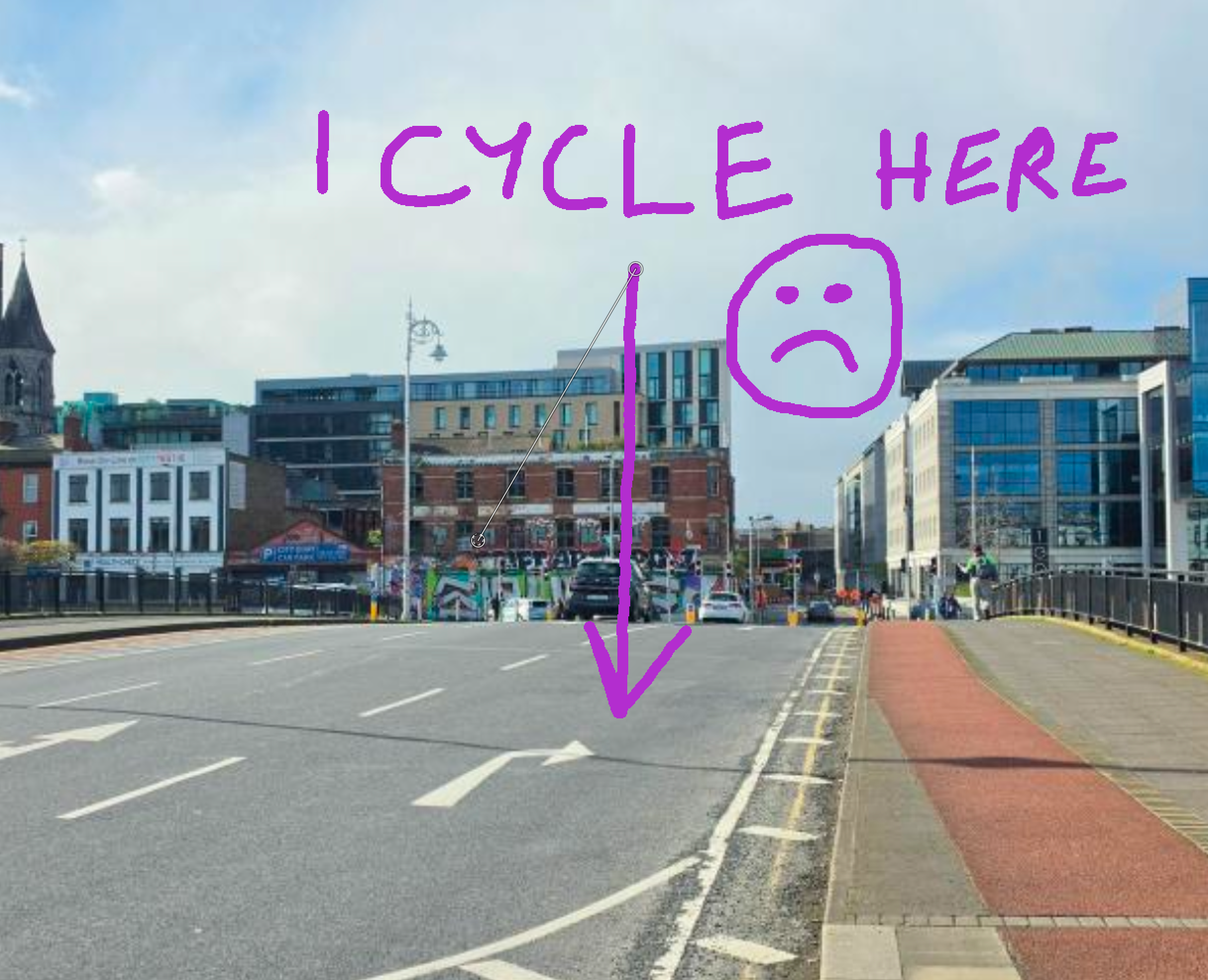
From the above, it's clear I have worked out a way to complete this part of the journey with a reasonable degree of safety, but there are plenty of other people (some of whom live in my house) who will not cycle into the city centre due to the hazards of this exact stretch. They feel safe on the C2CC, they feel safe on the segregated 2-way bike lane on the south quays, but since they can't connect one to the other without danger, their bikes remain in the shed.
What changes are coming?
The main change for cyclists is that there will be a diagonal bike crossing into a fully segregated 2-way bike lane running along the centre of the road. Here's how that impacts on the pain points I outlined above.
1) LUAS tracks - with the new design, there's no need to cross the LUAS tracks at an angle, as all bike traffic has moved into the central cycle lane a few hundred metres earlier (see the point marked "A" below). There's still the risk of coming off your bike if the tracks are wet, but at least if this happens you won't be in a lane with motor vehicles, so the risk of a slip-and-fall injury turning into a full-on Road Traffic Accident are reduced.
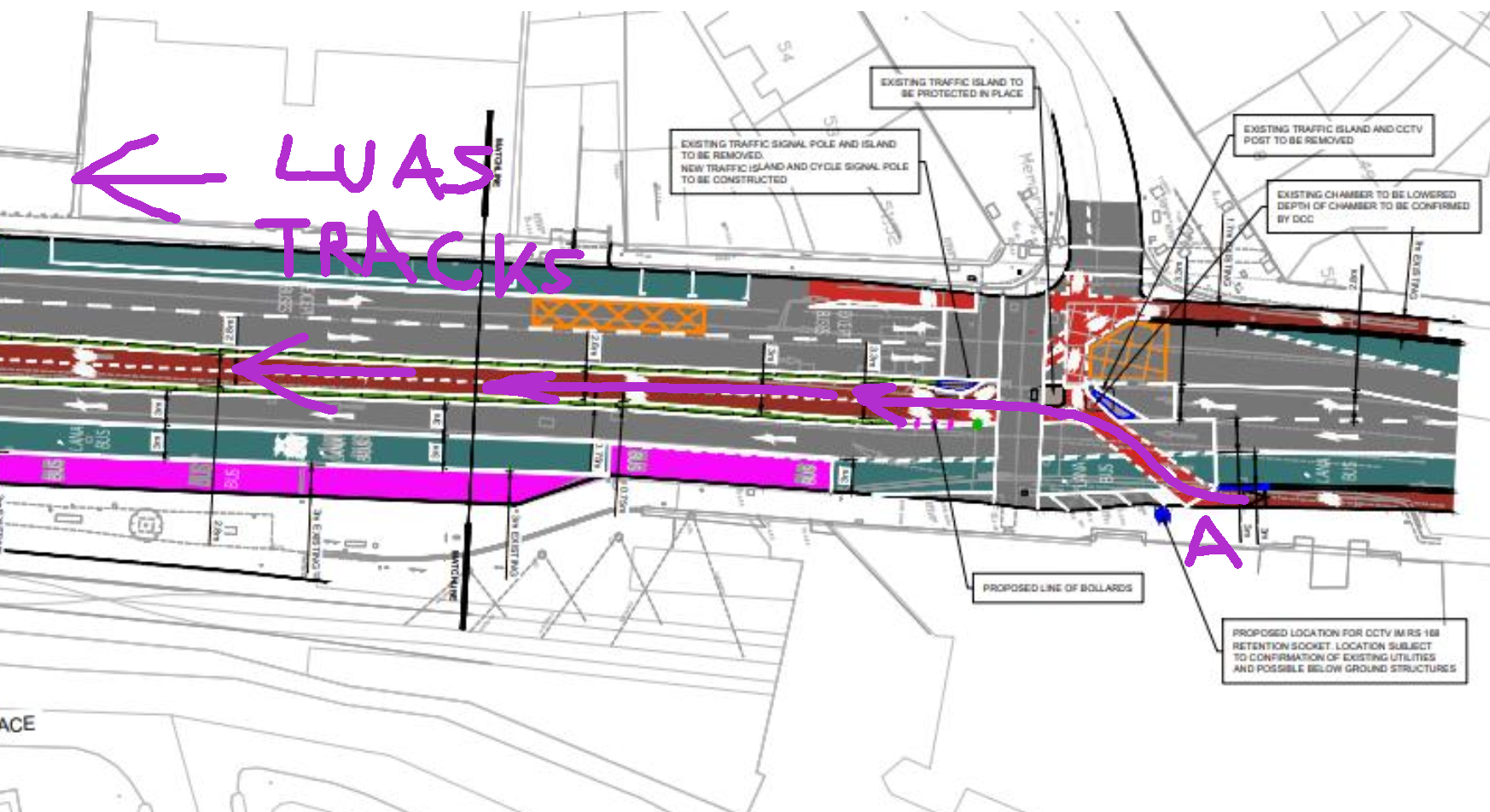
2) Eternal Flame - the segregated bike lane solves the problem of getting across to the right-hand side of the right-hand lane. By entering the protected bike lane you're already in the right place. Cyclists will still need to cross at the lights to get to the 2-way bike lane, but this is much easier to read and navigate than the current free-for-all - the 2-way bike lane at the side of the Customs House is welcome too, this is far safer than the current combined bus/bike lane.
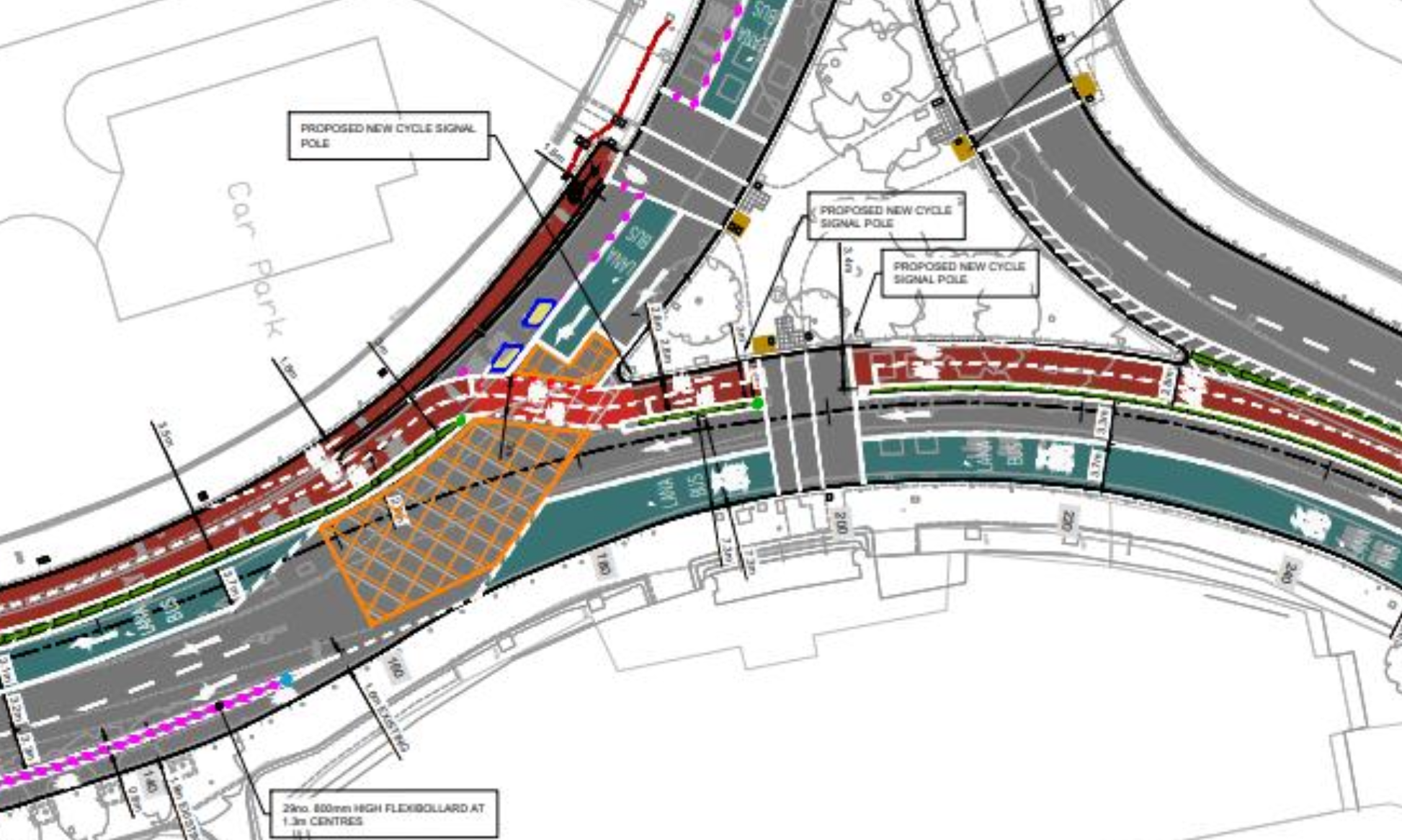
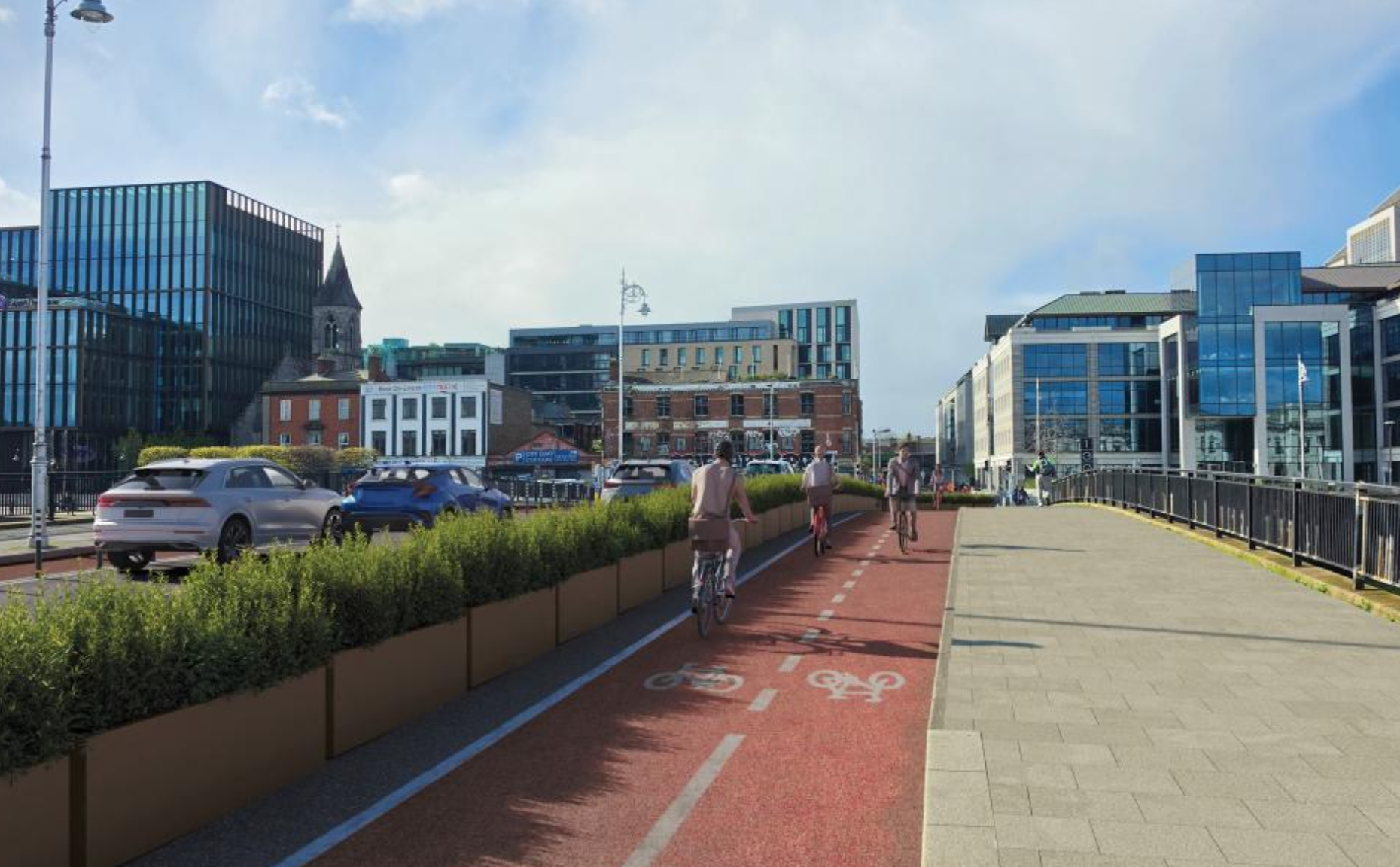
3) Talbot Memorial Bridge - The 2-way bike lane running along the side of the Customs House continues into a 2 way bike lane running along the west side of the bridge. It's hard to overstate how much of an upgrade this is relative to what is in place right now. This new 2-way lane links directly to the 2-way lane running along the south quays, with no need to get mixed up in motor traffic.
Are the changes an improvement?
On balance, I think this is a good design (not perfect, but good). My personal preference would be to reconfigure the gyratory around the Customs House and reimagine the area in front of Connolly Station to feel more like a "place" rather than a dull transport hub, but these options are difficult and time consuming in terms of planning, which makes them expensive and risky to deliver. The proposal here is a simple reconfiguration of existing road space, which requires no public consultation and can be delivered using inexpensive materials in a short timeframe. This pragmatic approach feels to me to be in the spirit of Street Fight, which outlines some of the transformation of Manhattan into a leading light of sustainable transport (highly recommended!).
As of June 2026, Dublin has no safe link between the high-quality bike infrastructure of the C2CC and the high-quality bike infrastructure along the south quays. This proposal creates that safe link - by deliberately ignoring any elements that aren't placed on asphalt it can be presented as a simple road reconfiguration that doesn't need public consultation. In my view, speed of delivery is a metric that is often ignored in public service and I'm pleased that Dublin City Council has kept it simple here in order to create the safe infrastructure that Dubliners need - even if it's not the beautiful high-quality infrastructure that Dubliners deserve!
Let's keep an eye on how this design works in practise and use the lessons we learn to help design the next version of this that delivers not just safety, but all the other features and affordances befitting a capital city of one of the wealthiest countries in the world. Now to convince my skeptical family members to try cycling to town!